
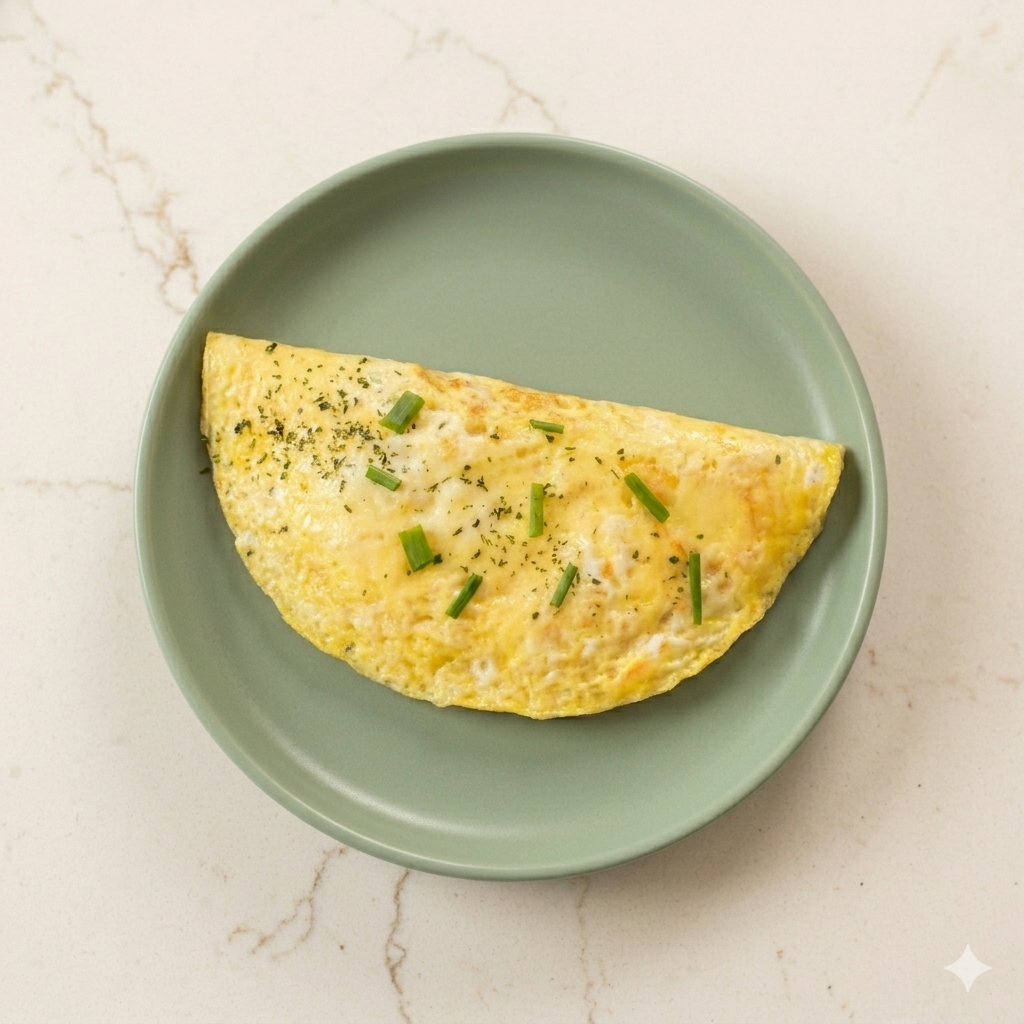
You’ve got scrambled eggs down (and down and down and down); you know what to do when the moment calls for hard-boiled. But what about an omelette? They’re tricky, temperamental; chefs fail at them constantly. You, though, like them; you know an omelette for toddlers would be just about perfect for your kiddo. Here, then, the good news: there is a method for omelette that, if not flawless, truly never fails; it also is about the easiest, even laziest possible way to cook eggs. Read on to learn how you can master an omelette for toddlers from your first cook and thereafter.
Ingredients Overview
- Large Eggs: Use three eggs to create enough surface area for a proper fold and a fluffy texture.
- Butter: Salted or unsalted works—this provides the “sizzle” and prevents sticking while adding healthy fats.
- Water or Milk: A tiny splash is the secret to creating steam, which helps the omelette lift and stay tender.
- Salt & Pepper: Just enough to enhance the flavor without overwhelming a toddler’s palate.
- Optional Mix-ins: Finely minced chives and shredded cheese add mild flavor and a hit of calcium.
Steps Summary
- Whisk and Prep: Blend eggs with seasoning and liquid until fully incorporated; prep your chives.
- The Sizzle: Melt butter over medium heat and pour in the eggs, tilting to cover the entire pan.
- The Steam Method: Once edges set, lower the heat and cover. This “lazy” method uses steam to cook the top without browning the bottom.
- Fill and Fold: Add your toppings, then use the “slide-and-fold” technique to land the omelette perfectly on the plate.
FAQ
Is this omelette soft enough for younger toddlers? Yes, the steaming method keeps the eggs tender and moist, making them much easier to chew than traditional pan-fried eggs.
Can I make this dairy-free? Absolutely. Swap the butter for avocado oil and use a splash of water or almond milk instead of cow’s milk.
What if my toddler doesn’t like green bits (chives)? Simply omit them or swap for finely nutritional yeast for a “cheesy” flavor without the texture of herbs.
How do I prevent the omelette from breaking? The key is using a lid. Steaming sets the top of the egg so it’s structural enough to fold without cracking.
Can I prep this in advance? Omelettes are best fresh, but you can whisk the egg mixture the night before and store it in a sealed container in the fridge.
Is it safe to add meat like bacon? Yes! Just ensure any meat is cooked thoroughly and “ripped” into very small, pea-sized pieces to prevent choking.
Recipe Links
What to Serve With Omelette for Toddlers
- Kale and Cheese Puffs — Another high-protein, egg-based snack that’s perfect for little hands.
- Veggie Donuts — A fun, baked alternative for getting vegetables and eggs into a picky eater’s breakfast.
- Tropical Protein Smoothie — Get an extra shot of protein and nutrition with this fun and lightly sweet drink.
More Toddler Recipes Like This
- Baby Omelette — A faultless approach to cooking eggs for infants new to solid foods.
- Fast Scrambled Eggs — If you have neither the time nor the patience to make an omelet, try this recipe–it gets eggs on the table in under two minutes.
- Eggy Crepe (Crepelet) — Child like pancakes but not eggs? This fifteen-minute masterpiece splits the difference.
Check out all of our best toddler breakfast recipes!
The Easiest, No-Fail Omelette for Toddlers
Description
This omelette for toddlers uses a clever steaming trick to ensure perfectly set eggs without the stress of a professional flip. A soft, customizable, and high-protein breakfast that’s ready in under five minutes.
Ingredients
Instructions
-
Heat a medium-sized pan to Medium. Mix the eggs, salt, a small pinch of pepper, and a splash of water (or milk) until fully blended. Chop the chives into small pieces.
-
Melt the butter in the pan until sizzling but not browned; pour egg mixture as soon as butter is bubbling, tilting pan to ensure eggs are evenly spread across entirety of pan.
-
Cook until the eggs at the edge of the pan are starting to set (i.e., solidify), roughly 45-60 seconds; turn heat down to roughly to Medium Low and cover pan. Let eggs cook until all but the area around the center of the pan is set, roughly 60 seconds.
-
Remove cover. Sprinkle cheese and chives all over the egg. Heat until all of the egg
-
Shake the pan to loosen the omelette, then tilt the pan down toward a plate, continuing to gently shake the pan to slide the omelette out of the pan and onto the plate; when half of the omelette is on the plate, tilt/turn pan up and over while shaking to have the rest of the omelette fold over the part already on the plate. Voila.
Serve
-
The omelette makes enough for a small child and one adult to have a full portion (or half portions for two adults), so carve out the piece of the omelette most appealing to your child and save the rest for yourself. If using the omelette for a breakfast sando, we recommend bread slices rather than bun.
Adapt
-
For a harder (read: more cooked) omelette, don’t turn heat down during steaming and the final cooking stage. Feel free to add whatever toppings you see fit; we can vouch for bacon in this–just rip a piece of bacon or two into small pieces and cook in pan until it reaches desired doneness; leave a small pool of the bacon grease in the pan, skip the butter, and cook as directed.
Nutrition Facts
Servings 3
Serving Size 1/3 of a full omelette
- Amount Per Serving
- Calories 100kcal
- % Daily Value *
- Total Fat 7g11%
- Potassium 75mg3%
- Total Carbohydrate 0.5g1%
- Sugars 0.2g
- Protein 7g15%
- Calcium 35 mg
- Iron 1 mg
- Vitamin D 1 mcg
* Percent Daily Values are based on a 2,000 calorie diet. Your daily value may be higher or lower depending on your calorie needs.