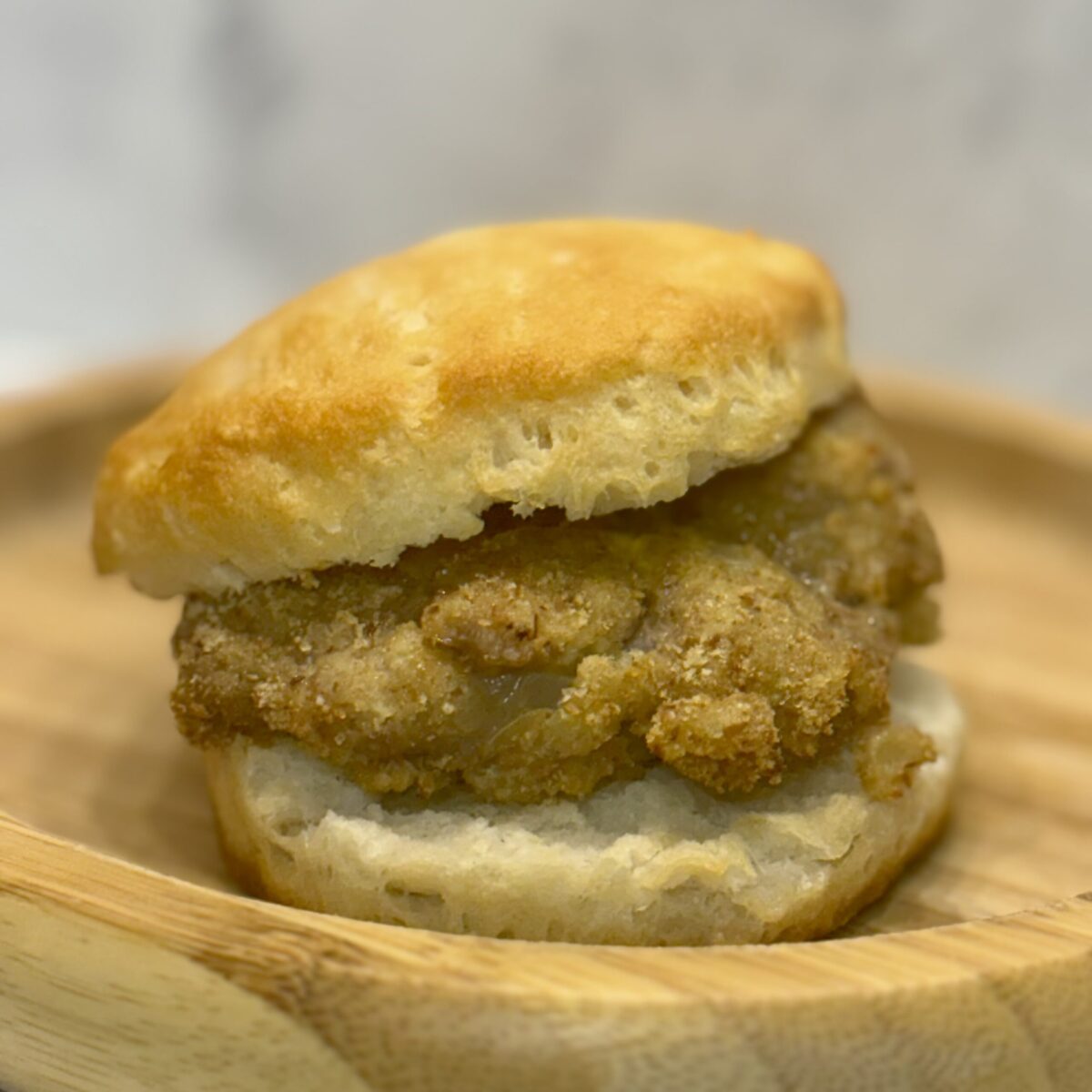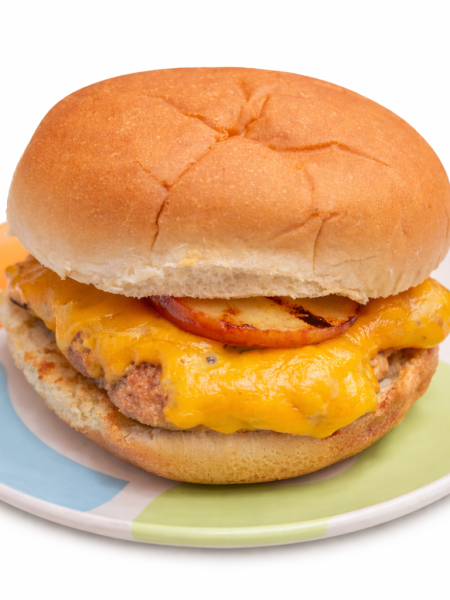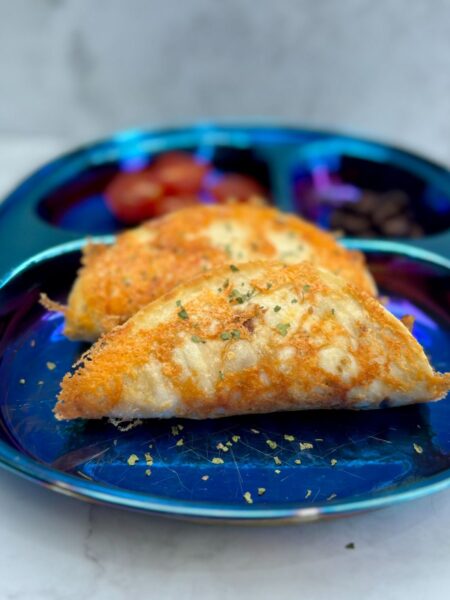


What’s true for salmon is true for pretty much any seafood: just -cake it. Crab is an obviously great place to start: the texture is firm and supple enough to both stay together when cooking and provide a substantive but easy chew for your child. The flavor is mild, slightly sweet—not fishy, and adaptable to the flavors and ingredients your child and/or you want to eat. Our choice? A bit of mustard and some cauliflower rice for added nutrition and body. Sauce it up as you like; smash it down. You’ve haven’t just made a crab and cauliflower cake sandwich; you’ve made a new fan of seafood.
Ingredients Overview
This crab and cauliflower cake sandwich is built on a simple, clever combination: sweet lump crab, finely chopped cauliflower for moisture and nutrition, and just enough binder to keep everything tender without feeling heavy. The cauliflower disappears into the patty, adding softness and structure while letting the crab flavor shine. A lightly toasted bun, a quick sauce, and a few pantry ingredients round out a recipe that feels special but is easy enough for a weeknight lunch or dinner with toddlers. It’s high in protein, rich in healthy fats, and far gentler in flavor than restaurant-style crab cakes — perfect for young eaters.
Steps Summary
- Prepare the cauliflower and chop it finely or pulse briefly until it resembles coarse crumbs.
- Mix crab, cauliflower, binder, seasonings, and any fresh herbs until combined.
- Form into small patties sized for toddlers or slider buns.
- Pan-sear until golden and crisp on both sides.
- Assemble the sandwich with sauce, bun, and any optional toppings.
- Serve warm with easy toddler sides.
FAQ
Can I use canned crab instead of fresh?
Yes — high-quality canned crab works well and is often milder, which toddlers tend to prefer. Drain it thoroughly so the patties stay cohesive.
Does the cauliflower change the flavor?
No. It softens and blends into the crab, adding nutrition and moisture without altering the taste. It’s an easy way to boost veggies without resistance.
What’s the best binder for the patties?
A small amount of egg and breadcrumbs works beautifully, but gluten-free crumbs hold up equally well. Keep the mixture moist but not wet.
How do I keep the patties from falling apart?
Chilling the mixture for 15–20 minutes before shaping helps them firm up. Make sure the pan is fully hot before cooking so a crust forms quickly.
What toppings work best for toddlers?
A thin layer of mayo, a mild tartar-style sauce, or even plain yogurt works well. Skip overly sharp toppings and spicy condiments for younger eaters.
Can I make the patties ahead of time?
Yes — the uncooked mixture can be stored for a day, or patties can be cooked and reheated gently in a skillet or air fryer.
Recipe Links
What to Serve With This Crab and Cauliflower Cake Sandwich
- Carrot Fries for Toddlers — a naturally sweet roasted side that pairs well with mild seafood.
- How to Make the Best Broccoli for Kids — soft, simple, and perfect for rounding out the meal.
- The Perfect Toddler Salad — a refreshing balance to a warm sandwich.
More Toddler-Friendly Recipes Like This (Seafood + Sandwich Alternatives)
- Salmon Burger — another seafood burger option to try with picky eaters.
- Salmon Bites for Toddlers — a sweet, familiar flavor profile that parallels the mildness of the crab cake.
- Chicken Teriyaki Burger for Toddlers — an alternative handheld sandwich with a similar soft texture and kid-friendly flavor.
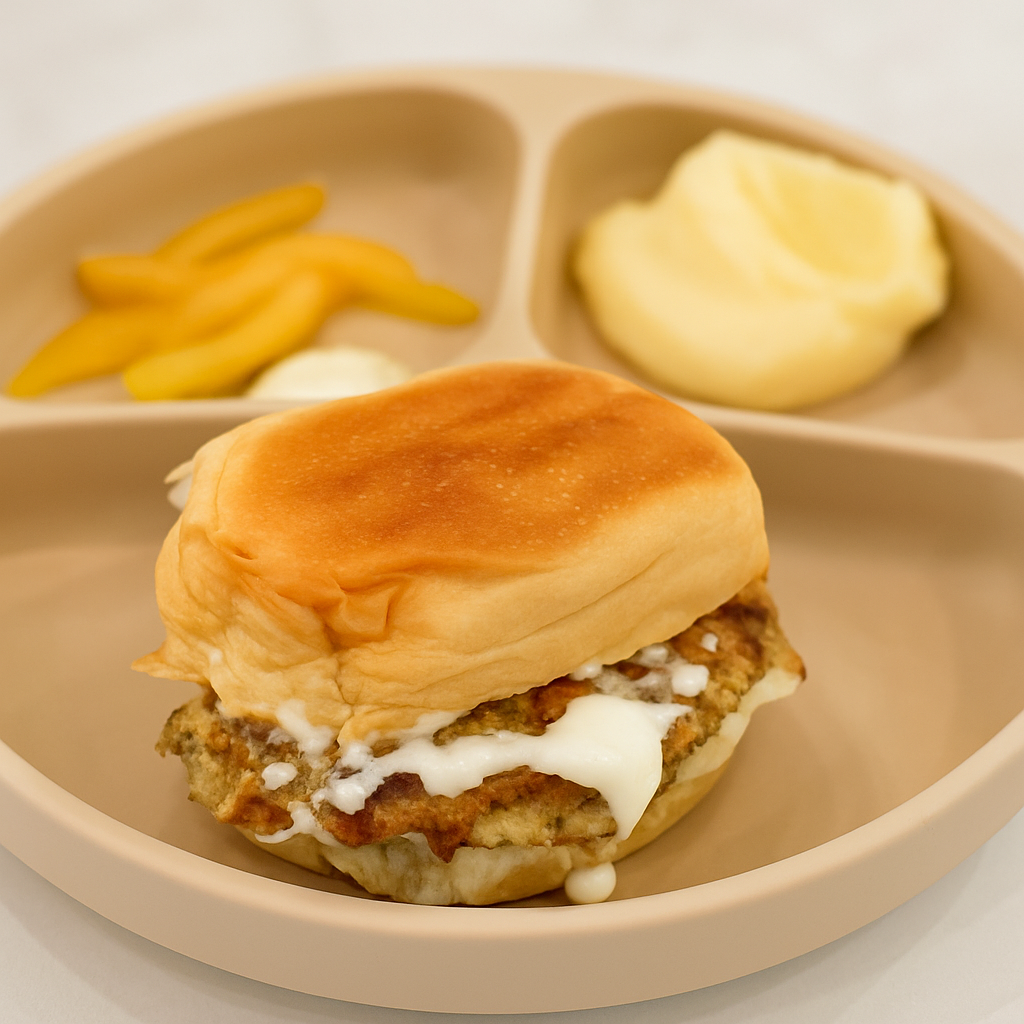
Veggie-Packed Crab and Cauliflower Cake Sandwich (Perfect for Kids & Parents)
Description
This crab and cauliflower cake sandwich blends sweet crab with finely chopped cauliflower for a tender, nutrient-packed patty toddlers love. Pan-seared until crisp and tucked into a soft bun, it’s a flavorful and kid-friendly way to introduce seafood.
Ingredients
Instructions
Prep
-
Microwave frozen cauliflower rice until thawed but not hot, roughly three minutes.
-
Add the cauliflower rice and crab meat to a medium bowl or container, cutting up or shredding any larger chunks; crack the egg over the top; add a spoonful each of mustard and mayo; shake in as much chives and garlic powder as you want: and crush/pulverize the crackers over the top. Mix until all the ingredients clump together easily.
-
Cover mixture and refrigerate for at least 10 minutes before cooking.
Cook
-
Heat a large sauté pan to Medium High. Coat the bottom with neutral cooking oil.
-
If using, toast both sides of the bun until each are lightly browned. A slight slick of mayo on one side won’t hurt.
-
Grab a small chunk of crab and form into a ball, then press down with the other hand to form a patty; place into pan. Repeat for remaining mixture.
-
Heat until each side is a deep brown and brittle, roughly two minutes per side. Remove from heat.
-
Squeeze lemon all over top of the crab patty, then place on bun (if using).
Serve
-
If your child is comfortable grasping and chewing larger food items, or if you want him/her to be more comfortable, this is an ideal vessel given its soft but sturdy package: cut into halves or quarters and allow your child to bite and consume at his/her own pace. Otherwise, press the sandwich down and cut into smaller bites or strips. You can use the sandwich to introduce creamy sauces/dressings, such as tartar ranch, and/or remoulade.
Adapt
-
Pretty much any shellfish (shrimp, lobster) or whitefish could be substituted here; heck, chicken or turkey could work as well. You can take out the cauliflower altogether–though no one will ever know it’s there–or sub in spinach or another leafy green.
Nutrition Facts
Servings 6
Serving Size 1 small sandwich
- Amount Per Serving
- Calories 250kcal
- % Daily Value *
- Total Fat 10g16%
- Cholesterol 40mg14%
- Sodium 200mg9%
- Potassium 200mg6%
- Total Carbohydrate 30g10%
- Dietary Fiber 2g8%
- Protein 16g32%
- Calcium 50 mg
- Iron 2.02 mg
- Phosphorus 200 mg
- Magnesium 20 mg
* Percent Daily Values are based on a 2,000 calorie diet. Your daily value may be higher or lower depending on your calorie needs.
Note
Most large chain grocery stores will carry chunk crab in 8oz containers. The recipe is designed for--and the example in the accompanying photo shows--claw meat; some grocery stores may carry packaged knuckle meat, which will be more expensive but has a richer mouthfeel.