


Omelets have that just-right texture ideal for fledgling eaters; given how sensitive they can be to pretty much everything (pan, heat, movement, et al.), however, they are less ideal for fledgling cooks. Thankfully, there’s a quick and dirty method, one so easy and foolproof that it will get you a solid egg each time you make it: high heat and brevity. (Fun fact: what follows is basically the same technique used at Chinese restaurants to make the chopped eggs in your fried rice!) The perfect baby omelet recipe.
When you’re ready to move on and up to different egg preps, check out our fluffiest scrambled or our whipped eggs!
Ingredients Overview
- Large Egg: The foundation of this baby omelet recipe, providing high-quality protein and healthy fats for brain development.
- Liquid (Breast Milk, Formula, or Water): A small splash of liquid helps steam the egg as it hits the pan, ensuring the baby omelet recipe results in a soft, tender texture that is easy for infants to gum.
- Fat (Unsalted Butter or Olive Oil): Used to coat the pan; for infants, unsalted butter is preferred to keep sodium intake low while adding a boost of healthy fats.
- Dried Chives (Optional): A great way to introduce mild herbal flavors into this baby omelet recipe without adding sodium or heat.
Steps Summary
- Preheat the Pan: Get your small skillet hot over medium heat for several minutes to ensure the egg sets instantly.
- Whisk the Mixture: Combine the egg and your chosen liquid, beating thoroughly until no streaks of white remain.
- Flash Cook: Melt the fat, then turn off the heat before pouring in the egg; this quick cook time keeps the baby omelet recipe from becoming rubbery.
- Roll and Set: Use a spoon or fork to roll the thin egg sheet into a “cigar” shape, allowing the residual heat to finish the centers.
- Cool and Slice: Move the omelet to a plate and cut it into age-appropriate shapes (strips for younger babies, bites for older infants).
FAQ
When can I introduce this baby omelet recipe to my infant? Most pediatricians recommend introducing eggs as soon as your baby is ready for solids, typically around 6 months.
Is it safe to include chives or other herbs? Yes, introducing mild herbs and spices early on is a great way to expand your baby’s palate without using salt.
Can I make this baby omelet recipe ahead of time? While best served fresh for the softest texture, you can store it in the fridge for up to 24 hours and gently reheat.
What if the egg looks slightly runny? Since the heat is turned off, you can use the warmth of the pan to press down on the rolled omelet for an extra few seconds to ensure it is fully set.
Should I use the whole egg or just the yolk? Current guidelines suggest that introducing the whole egg (both white and yolk) is beneficial for most infants starting solids.
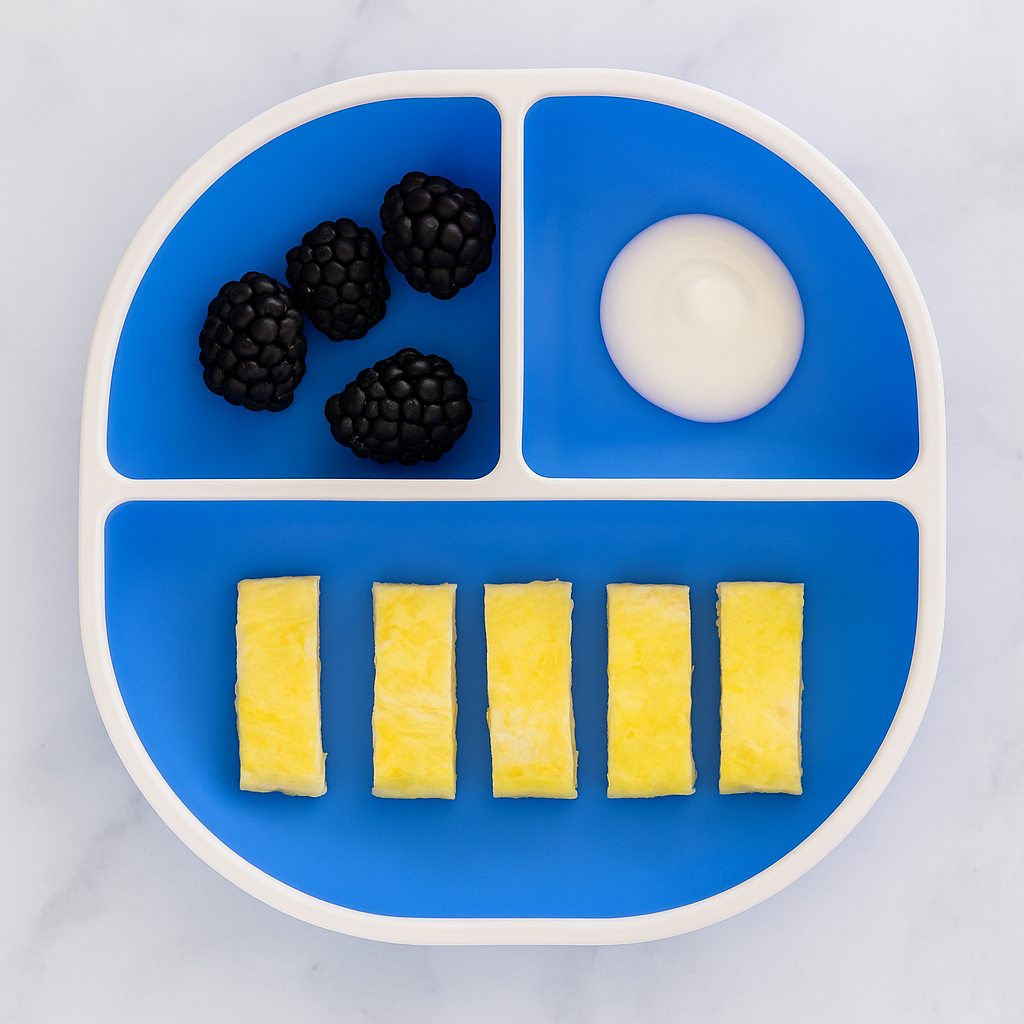
How do I serve this for baby-led weaning? For babies 6-9 months, cut the omelet into long, finger-width strips that are easy for them to grasp and bring to their mouth.
Recipe Links
More Toddler Recipes Like This
- First Banana Pancakes — A no-fail approach to introducing a classic first solid food to your infant.
- Fluffy Toddler Scrambled Eggs — A kid-approved method for making soft, approachable scrambled eggs for picky eaters.
- Perfect Creamy Scrambled Eggs — A velvety, slow-cooked egg preparation that focuses on a cloud-like texture for infants.
- Omelette For Toddlers — When your kiddo is ready for a thicker, eggier version, check out this easy method.
Introducing Eggs to Infants (Baby Omelet Recipe)
Description
This baby omelet recipe uses a high-heat, "flash-cook" technique to create a soft and tender texture that is perfect for infants starting solids. It is a quick, nutrient-dense breakfast that can be sliced into strips for baby-led weaning or small bites for older toddlers
Ingredients
Instructions
-
Place the smallest pan you have at your stove’s Medium level–say, a ‘5’ or ‘6’–for five minutes and do nothing. Just let it be.
-
While it heats, beat an egg with a splash of your chosen liquid (see Ingredients) and your seasonings (if using) until blended.
-
When the pan is hot enough that you feel heat on your hand when holding it a foot or so above the pan drop a small swipe of butter (or equivalent) into the pan; swoosh it around until it melts.
-
Turn OFF the heat and immediately pour the egg mixture into the pan, swooshing it around so that it covers the surface; it should bubble and sizzle very quickly.
-
After roughly fifteen or twenty seconds, use a fork or spoon to roll the egg up into a cigar-shaped form by lifting one edge up and pushing it over the other parts of the pan. If egg oozes out of the roll, or if some parts look undercooked, you can either press down on them to sear and/or flip the roll so they directly touch the pan.
-
Shake off the pan and onto a plate. Cut to cool.
Serve
-
Chop into small strips for 6-8 month-olds and small squares for a 9-12 month infant. Season or sauce how you see fit, but be sure and wait until the egg has cooled before serving.
Adapt
-
Once your child is familiar with the taste and texture of the egg, you can begin to add ingredients into the omelet, such as cheese, bits of meat, and so on. To do so, drop in the ingredients right after you’ve covered the surface with the egg; do so in the area of the pan that appears most cooked.

Nutrition Facts
Servings 1
Serving Size one omelet
- Amount Per Serving
- Calories 78kcal
- % Daily Value *
- Total Fat 5g8%
- Potassium 69mg2%
- Total Carbohydrate 0.6g1%
- Dietary Fiber 0g
- Sugars 0.6g
- Protein 6g12%
- Calcium 28 mg
- Iron 1 mg
- Vitamin D 0 IU
* Percent Daily Values are based on a 2,000 calorie diet. Your daily value may be higher or lower depending on your calorie needs.