

Homemade pizza–the sort you could cobble together in minutes on a Monday night–does not get any easier than this take on Roman-style ‘za, utilizing an approach whose brilliance is in its sheer idiocy: it’s upside down pizza. Yes, really: bread on top, cheese and toppings on bottom. You really use pre-made–even mass produced–dough; you really barely do anything to get it into the oven. And–somewhow–it works! It’s pizza; it tastes good. It’s yours.
Indeed, because all the toppings and components of the pizza are fully customizable, the directions below are going to be general enough to work with a variety of ingredients–but specific enough to get good results with anything. Use our topping suggestions as a jumping off point, or go with what you know your kid likes–even if it’s just picking pepperoni pieces off a slice. But know this:
- The only absolute essential, non-negotiable here to pull off an upside down pizza is a 9×13 baking device, whether in the form of a “quarter-sheet” baking pan or a casserole dish of the same size. If you only have a large baking pan, you will need at least 1.5 pounds of pizza dough to cover.
- You’ll only need about half of a small or medium sized vegetable–or a quarter or third of a large veggie–to cover the upside down pizza, especially if you’ve got multiple toppings.
- In our experience, mass-produced readymade pizza dough–you know, like the kind that comes out of a tube–tends to be on the thinner side and will likely need only 15 minutes in the oven; thicker, ball-shaped pizzeria-style dough will need more like 20-25 minutes.
If looking to make your own pizza dough, check out our high-protein dough recipe!
Ingredients Overview
- Uncooked Pizza Dough: A standard one-pound ball of store-bought dough works perfectly. Pizzeria-style dough from the deli counter will yield a thick, pillowy crust, while a mass-produced tube of refrigerated dough will give you a thinner, crisper Roman-style snap.
- Shredded Mozzarella Cheese: Low-moisture shredded mozzarella creates a structural barrier between the wet toppings and the dough, melting down to glue the upside-down components together.
- Olive Oil & Garlic: Olive oil is essential for both frying the vegetables directly in the pan and ensuring the dough crisps beautifully on top. Thinly sliced garlic sweetens up during the bake without burning.
- Topping Profile #1 (Bacon & Potato): Thinly sliced baby potatoes and chopped bacon mirror a classic Italian pizza con patate. The potatoes soften in the oil before the crust locks in their moisture.
- Topping Profile #2 (Zucchini, Onion, & Tomato): A garden-fresh combination that softens into a sweet, jammy layer. Dabs of ricotta added right after the flip bring a creamy contrast to the crisp crust.
Steps Summary
- Prep and Season Veggies: Slice all chosen vegetables thin and flat, toss them with olive oil and salt, and spread them evenly across the bottom of a 9×13 baking pan.
- Par-Bake the Base: Roast the vegetable layer at 400°F for 6 to 8 minutes until softened, then remove the pan from the oven.
- Roll and Stretch Dough: On a floured surface, roll out the room-temperature pizza dough as thin as possible to match the dimensions of your pan.
- Layer and Cover: Flip the vegetables over in the pan, add an extra drizzle of oil, sprinkle your cheese and dried herbs evenly over the top, and drape the stretched dough over everything, tucking the edges down.
- Bake Until Golden: Increase the oven to 425°F and bake for 15 to 25 minutes (depending on dough thickness) until the top crust is deeply browned.
- Flip and Serve: Loosen the edges with a spatula, place an upside-down tray or cutting board over the pan, quickly invert it, and slice into easy-to-hold strips perfect for dipping in warm tomato sauce.
FAQ
Can I add tomato sauce directly into the pan before baking? No, you shouldn’t put tomato sauce at the bottom of the pan. Because the sauce would be in direct contact with the hot metal under intense heat for 15 to 25 minutes, it will burn, turn bitter, and make the pizza stick. Keep the sauce on the side for dipping or drizzle it on top after flipping.
How do I prevent the dough from getting soggy from the vegetable moisture? Par-baking the vegetables for a few minutes before adding the dough is the secret step. This cooks off the excess water in veggies like zucchini and tomatoes. Additionally, laying down the shredded mozzarella over the vegetables before topping it with dough creates an effective moisture barrier.
What should I do if my pizza dough keeps shrinking back when I try to roll it? If your dough is acting like a rubber band, it is likely too cold and the gluten is tight. Let it sit covered on your floured counter at room temperature for 15 to 20 minutes to relax the proteins, and it will stretch out effortlessly.
What type of pan works best for an upside down pizza? A standard metal 9×13 quarter-sheet pan or a metal baking pan works best because metal conducts heat quickly to crisp up the toppings and crust. A ceramic or glass casserole dish can be used, but you may need to add 3 to 5 minutes to the baking time to achieve the same golden color.
My kid hates zucchini; what are the best alternatives for this upside down pizza method? The beauty of this sheet pan method is its total customizability. You can easily substitute the zucchini with mild, kid-approved alternatives like sweet corn kernels, thin slices of mild bell peppers, shredded chicken, or simple pepperoni discs layered beneath the cheese.
Recipe Links
What to Serve With Upside Down Pizza
- Green Pasta — A vibrant, nutrient-packed companion dish that adds a serving of leafy greens to a fun, Italian-inspired weeknight dinner.
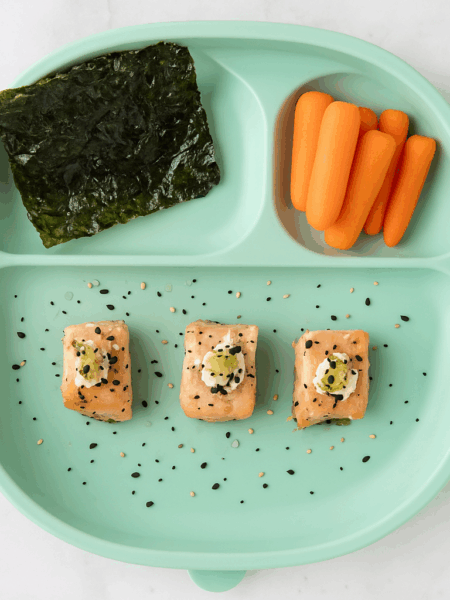
- Salmon Puffs — Another fun, customizable finger food that delivers essential nutrients in a manageable, soft texture for younger children.
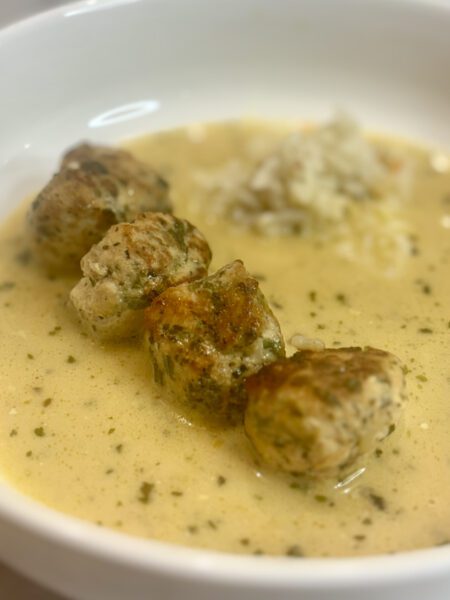
- Dumpling Meatballs — An easy-to-grip, protein-forward option that pairs perfectly alongside pizza strips and a dipping ramekin of warm red sauce.
More Toddler Recipes Like This
- Potato Flatbread — If your toddler loved the potato-and-bacon topping profile, this simple flatbread uses up leftover potatoes for a speedy lunch.
- Carrot Focaccia — Bring extra bread-basket variety to the table with this sweet, veggie-infused flatbread that kids love to pull apart.
- Nutritious Pizza — An easy homemade pizza recipe with protein, iron, and fiber counts that exceed daily recommended amounts for toddlers.
Check out all our great toddler dinner recipes!
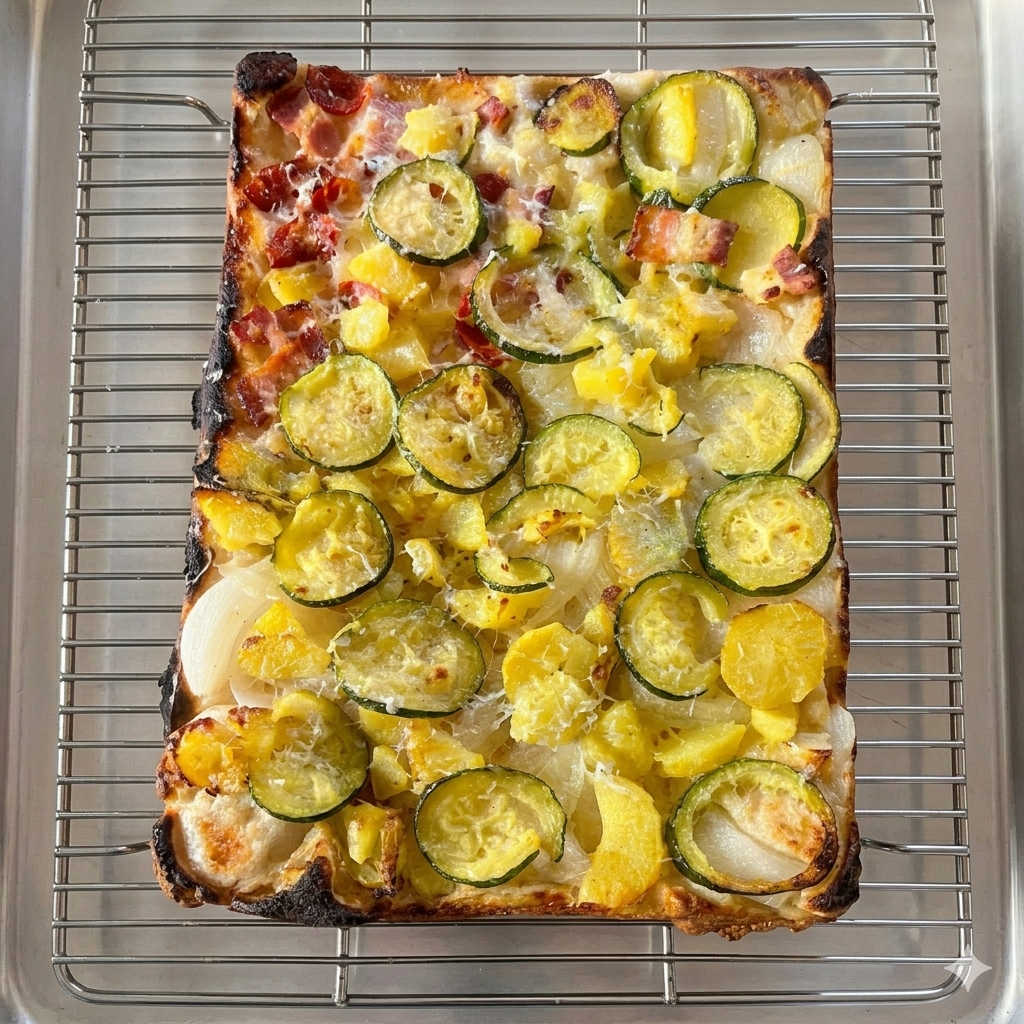
Upside Down Pizza for Kids: The Easiest Homemade Pizza
Description
This easy Roman upside down pizza for kids flips the script on pizza night by baking the toppings right into the pan under the crust. It is a foolproof, customizable weeknight dinner that lets toddlers dip their way through dinner.
Ingredients
Topping Idea #1
Topping Idea #2
Instructions
-
Preheat your oven to 400.
-
Slice your vegetables thin and flat; do the same with your garlic (if using). Toss the veggies in a tablespoon of oil and two pinches of salt. Spread the veggies out in a 9x13 sheet pan (or baking pan or casserole dish), making sure they cover the entirety of the pan.
-
Cook the vegetables until they soften, roughly 6-8 minutes. Remove from heat.
-
While veggies cook, generously flour a flat surface area. Unpack or unroll your dough, then roll it around the flour to firm it up slightly. With a roller, flatten and spread the dough out as far and as thin as you can.
-
Turn your vegetables over and drizzle a bit more olive oil over the veggies and the pan. Sprinkle shredded cheese and any seasonings you are using all over the veggies, then cover the entirety of the pan with your stretched dough, tucking in the sides as needed to ensure the pan is covered from end to end. Drizzle the remaining tablespoon of olive oil all over the top of the dough.
-
Place pan into the oven and raise the oven temperature to 425. Cook until top of the crust is fully browned all over, roughly 15 minutes if your layer of dough is thin and 25 minutes for a thicker dough layer. Remove from heat as soon as the top is an even golden brown.
-
Run a spatula around the edges of the pizza and across its bottom to ensure it is not sticking to the pan; then use another pan or plate the size of the cooking pan to cover the top of the pizza. Quickly flip the top pans so that the crust is on bottom and the toppings are on top.
-
Sprinkle the top of the pizza with parmesan cheese and/or put a dollop of soft cheese (i.e., ricotta) on each slice.
Serve
-
We like to cut a piece of pizza into long strips and serve with a small ramekin of tomato sauce, thereby allowing our child to dip the pizza into the sauce; you could also spoon or drizzle a line or two of sauce down one or both sides of a pizza slice a la Detroit-style pizza.
Adapt
-
We’ve listed a couple of toppings ideas in the “Ingredients” section above; just about any combo will work here. One thing you absolutely cannot do, though, is put tomato sauce in the pan–it’ll likely burn. Otherwise, go nuts (or not).
Nutrition Facts
Servings 6
Serving Size 1 square slice
- Amount Per Serving
- Calories 280kcal
- % Daily Value *
- Total Fat 11g17%
- Potassium 180mg6%
- Total Carbohydrate 36g12%
- Dietary Fiber 2g8%
- Sugars 2g
- Protein 10g20%
- Calcium 65 mg
- Iron 2.1 mg
- Vitamin D 0 IU
* Percent Daily Values are based on a 2,000 calorie diet. Your daily value may be higher or lower depending on your calorie needs.